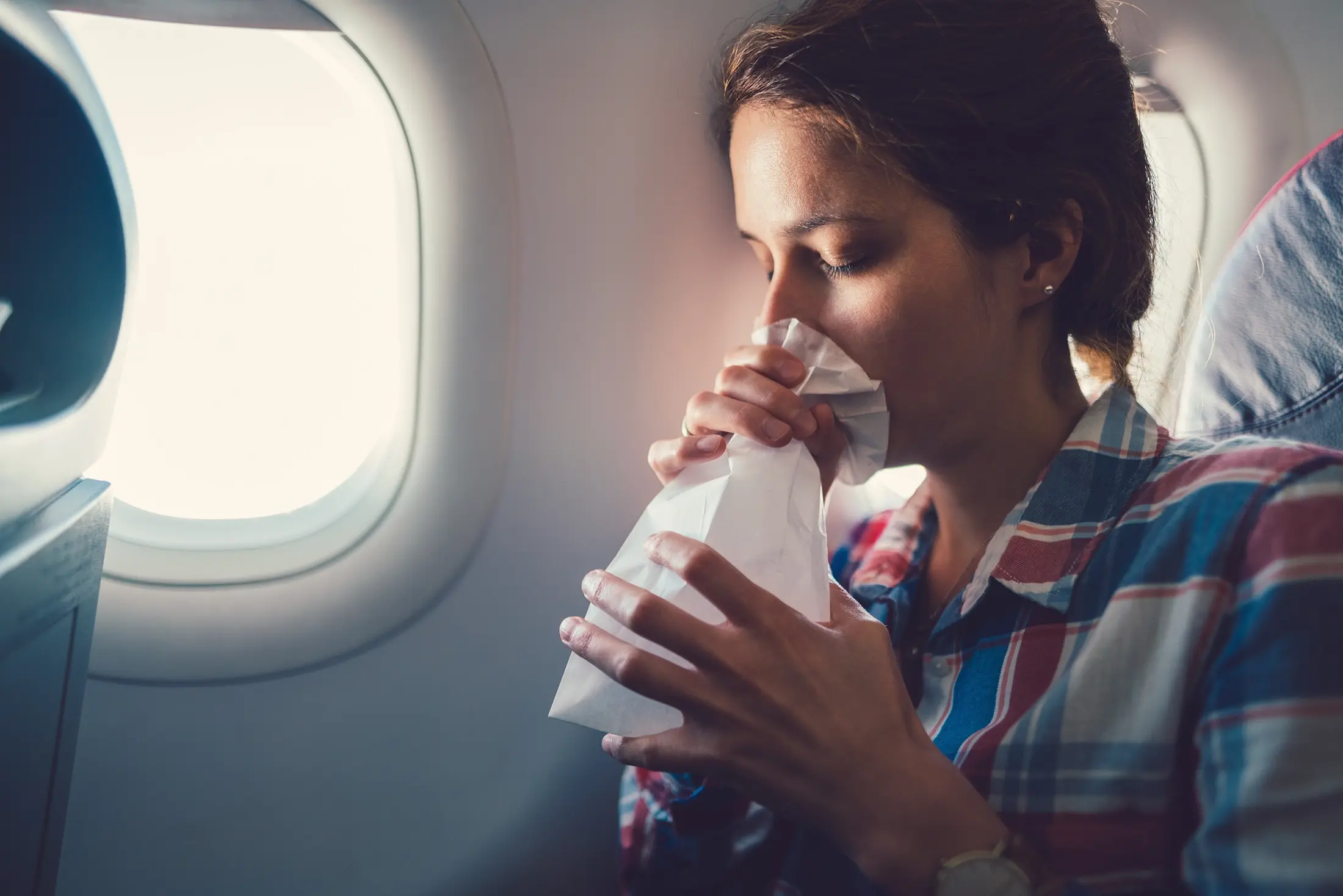
Aerophobia or Fear of Flying!
Aerophobia (also called aviophobia) is the persistent, intense fear of flying or of being on an aircraft. To qualify as a specific phobia under the DSM-5 (the American Psychiatric Association's diagnostic manual), the fear must be disproportionate to the actual threat, cause significant distress or functional impairment, and have persisted for at least six months. It is not a character flaw or a sign of weakness — it is a recognized anxiety disorder, and it is highly treatable.
To understand where this fear comes from psychologically: Psychology: Where Does the Fear of Flying Come From?. To understand how widespread it is: Statistics: Who Is Afraid of Flying?.
Definition and Diagnostic Criteria
The DSM-5 classifies aerophobia as a specific phobia — situational type. The diagnostic criteria require that all of the following are present:
Marked fear or anxiety about flying or about a specific aspect of flying (turbulence, takeoff, enclosed spaces, heights at altitude)
The flight or air travel situation almost always provokes immediate fear or anxiety
The situation is actively avoided or endured with intense fear or anxiety
The fear or anxiety is out of proportion to the actual danger posed by the specific object or situation
The fear, anxiety, or avoidance is persistent, typically lasting 6 months or more
The fear, anxiety, or avoidance causes clinically significant distress or impairment in social, occupational, or other important areas of functioning
Importantly, the last criterion — significant distress or functional impairment — is what distinguishes a clinical phobia from garden-variety nervousness. Many people are nervous about flying without meeting the diagnostic threshold for aviophobia.
Aerophobia vs. Flight Anxiety: A Continuum
Fear of flying exists on a spectrum:
Mild anxiety: Slightly elevated nervousness before or during a flight, manageable with distraction or reassurance. Does not significantly affect behavior or life choices.
Moderate anxiety: Regular significant distress that makes flying uncomfortable, may require medication or specific coping strategies. Flying is still done but with significant unpleasantness.
Severe anxiety/phobia: Intense, overwhelming fear that leads to avoidance — refusing flights, choosing longer routes, declining opportunities (professional, personal) that involve flying. This is the clinical phobia range.
Most people who consider themselves afraid of flying fall in the moderate range. The clinical phobia threshold, while significant, is reached by an estimated 2.5–6.5% of the general population.
What Triggers Aerophobia?
Aerophobia has multiple subtypes based on what specifically triggers the fear:
Fear of turbulence — the most common specific trigger
Fear of technical failure or crash — catastrophic thinking about aircraft malfunction
Fear of heights combined with enclosed spaces — an interaction between distinct phobias
Fear of losing control — being a passive passenger with no ability to act
Fear of panic itself — the fear of having a panic attack on the plane, separate from the flight itself
Specific traumatic conditioning — a previous frightening flight, news report, or traumatic life event
Some individuals have a single dominant trigger; others experience a cluster. This is relevant for treatment, as different triggers may respond to different approaches.
Physical Symptoms
Aerophobia produces the full range of anxiety symptoms: racing heart (tachycardia), shortness of breath, sweating, trembling, dizziness, nausea, feeling of unreality (derealization), and in severe cases, panic attacks with the sensation that one is dying or losing control.
These symptoms are a normal response of the sympathetic nervous system to a perceived threat. They are not signs of medical emergency. They cannot cause physical harm. They will pass. Understanding this is one of the first therapeutic goals — learning to interpret these symptoms as anxiety, not as evidence that danger is real.
Aerophobia and Related Conditions
Aerophobia frequently co-occurs with claustrophobia (fear of enclosed spaces), acrophobia (fear of heights), and generalized anxiety disorder. It can also develop as part of post-traumatic stress disorder if the fear has a traumatic origin. Accurate assessment of these related factors affects treatment planning.
Treatment
Aerophobia is one of the most successfully treated specific phobias. Cognitive-behavioral therapy (CBT) with exposure is the gold-standard treatment, with success rates of 70–90% in structured programs. Specialized fear of flying programs that combine CBT, psychoeducation, and real or simulated flight exposure are particularly effective: Fear of Flying Course: The Solution to Travel Peacefully!.
Clinical References
The American Psychiatric Association's overview of anxiety disorders places aerophobia in clinical context: DSM-5: Specific Phobia — APA.
Cleveland Clinic's page on aviophobia covers the clinical definition, symptoms, and treatment options clearly: Cleveland Clinic: Aviophobia (Fear of Flying) — Diagnosis & Treatment.
The ADAA's specific phobia resources explain the diagnostic criteria and available treatments: Anxiety and Depression Association of America: Specific Phobias.
FAQ
Is aerophobia the same as claustrophobia?
They are distinct phobias but frequently co-occur. Claustrophobia is the fear of enclosed spaces; aerophobia is the fear of flying specifically. Some people's flight anxiety is primarily driven by claustrophobia (the aircraft cabin feels like a trap); in others, it is primarily driven by fear of heights or of crashing. Treatment approaches may differ accordingly.
Can aerophobia be cured?
'Cure' is a strong word for any anxiety condition, but aerophobia is highly treatable. Most people who complete structured, exposure-based programs report significant and lasting reduction in anxiety, with many describing themselves as comfortable or even relaxed flyers after treatment.
Can a child have aerophobia?
Yes. Specific phobias can develop in childhood. Treatment approaches for children typically involve developmentally adapted CBT and, where possible, family involvement. The same principles apply — education, gradual exposure, building a new association between flying and safety.
Recognize It, Name It, Treat It
If what you experience goes beyond nervousness and significantly limits your life, it's worth naming it: this is a specific phobia, and it responds to treatment. Start by understanding your level of anxiety: Take the free quiz.
Our online program are designed specifically for people in the moderate-to-severe range — those for whom flying has become an obstacle in life.