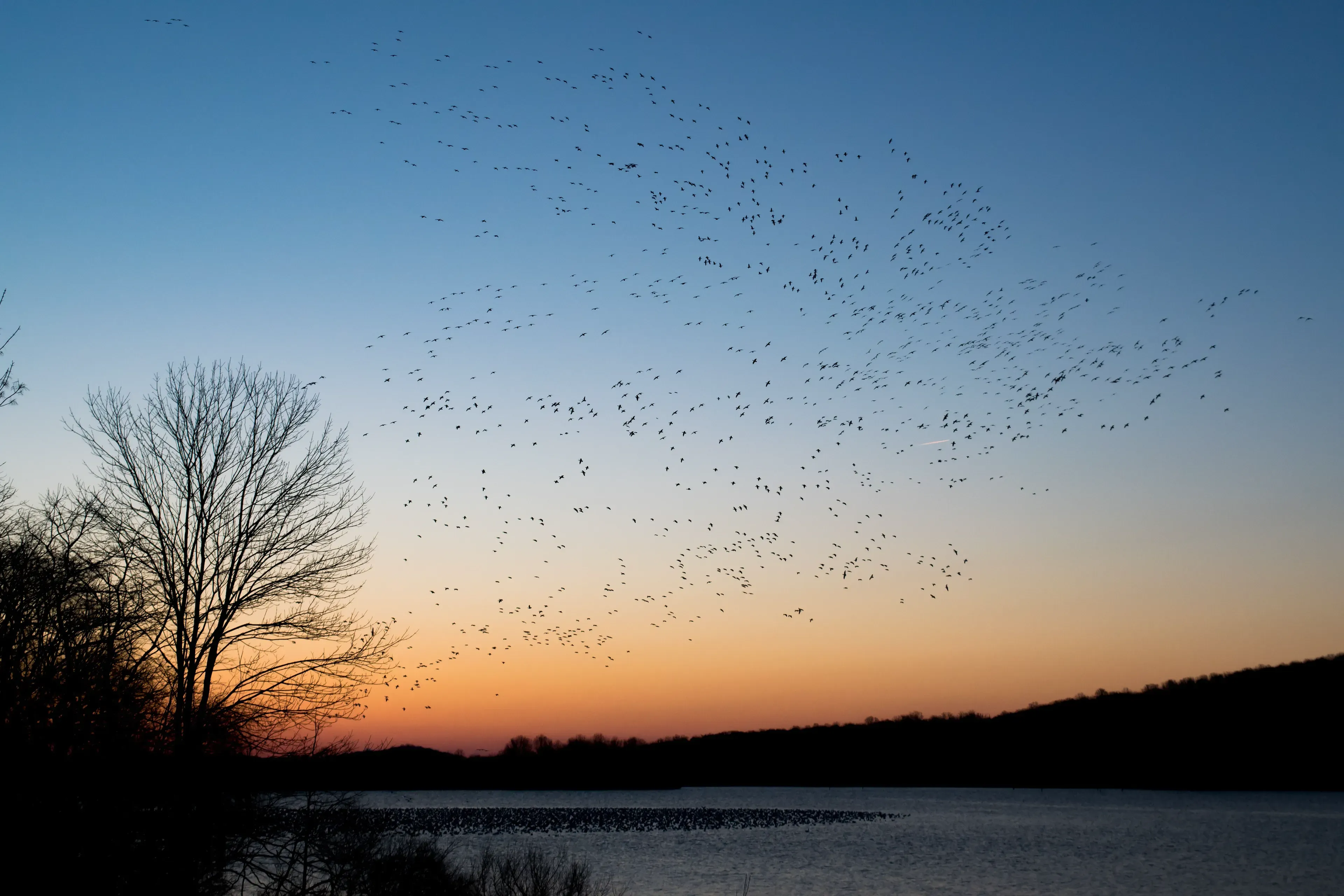
Bird Strike: When Wildlife Meets Aviation
A bird strike — the collision of a bird with an aircraft — occurs approximately 14,000 times per year in the United States alone, and far more globally. The vast majority cause no significant damage. Engines are tested and certified to withstand ingestion of multiple birds. However, large bird strikes (especially to both engines simultaneously, as in the 2009 Hudson River incident) can cause serious damage requiring emergency action. Aviation authorities track every strike and use the data to reduce wildlife hazards at airports.
For other atmospheric events that seem more dangerous than they are: Can a Plane Be Struck by Lightning?. For safety statistics that put these events in context: The Airplane: The Safest Mode of Transportation!.
How Often Do Bird Strikes Happen?
According to FAA Wildlife Strike Database data, roughly 14,000 wildlife strikes are reported annually in the US. Globally, estimates suggest over 90,000 strikes per year. Birds account for the vast majority; smaller numbers involve bats, deer, coyotes, and other animals on runways.
Most strikes occur during takeoff, landing, or low-altitude flight (below 3,000 feet), where wildlife activity is most concentrated. High-altitude strikes are rare but do occur — birds have been documented at altitudes above 30,000 feet.
What Happens to the Aircraft?
Low-severity strikes
The great majority of bird strikes cause minor or no damage — a dent, a cracked radome (nose cone), a scratched windshield. These are recorded and inspected during the next maintenance check. Operations continue normally. Passengers typically notice nothing.
Engine ingestion
Engine bird ingestion is the most safety-relevant category. Turbofan engines (the large, high-bypass-ratio engines on modern airliners) are certified to ingest birds and continue operating. The certification requirements include ingesting a 4-pound bird (roughly the size of a large duck) and continuing to produce thrust for a specified period.
Modern engine fan blades are designed to shed rather than absorb bird material — the impact fragments are expelled through the engine rather than causing blade failure. Titanium fan blades with specific aerodynamic profiles have largely solved the problem of single-bird strikes to high-bypass turbofans.
Rare but significant: flocking birds and large species
The most dangerous scenario is simultaneous ingestion of multiple large birds by both engines — the scenario that occurred on US Airways Flight 1549 in January 2009, when Captain Chesley 'Sully' Sullenberger successfully landed on the Hudson River after a flock of Canada geese destroyed both engines. This event was extraordinary — the probability of complete dual-engine failure from bird ingestion is extremely low under any circumstances.
How Airports Manage Wildlife Hazards
Every major airport has a wildlife management program that uses a combination of methods to deter birds and other animals from the vicinity of runways. These include: trained falconry (falcons and other predators that deter smaller birds naturally), acoustic deterrents (distress calls and predator sounds played through loudspeakers), habitat modification (removing or discouraging vegetation and water bodies that attract birds), radar monitoring of bird activity, and coordinated patrols.
Wildlife hazard management is now a regulatory requirement at certificated airports in the US and Europe. Data from every bird strike is reported to the FAA Wildlife Strike Database, which drives evidence-based improvements in control strategies.
Aircraft Certification Standards
Both the FAA and EASA require all commercial aircraft engines to pass bird ingestion tests before certification. The standards specify minimum bird weights, quantities, and the required post-ingestion performance (continue producing thrust, allow safe landing). These tests are conducted using realistic bird models fired at full-speed engines under controlled conditions.
These certification requirements are one component of the comprehensive safety system that makes commercial aviation so reliable: Turbulence on a Plane: Different Categories and Consequences.
Sources
The FAA's Wildlife Strike Database is the world's largest data source on aviation wildlife strikes: FAA: Wildlife Strikes to Civil Aircraft.
Smithsonian Air and Space Magazine has published detailed, accessible coverage of bird strikes and aviation: Smithsonian Magazine: Bird Strikes in Aviation.
Popular Mechanics explains the engineering behind how jet engines handle bird ingestion: Popular Mechanics: How Jet Engines Handle Bird Strikes.
FAQ
Can a single bird bring down an airliner?
No. Single-bird strikes to the fuselage, wings, or tail rarely cause significant structural damage. Single-bird strikes to one engine are manageable — modern engines are certified to continue operating after ingesting a large bird. The rare catastrophic scenarios involve multiple large birds ingested into both engines simultaneously.
Have bird strikes caused fatal accidents?
Yes, historically — but extremely rarely in the modern era. The FAA database records approximately 2–3 fatal accidents globally attributable to wildlife strikes over recent decades, out of millions of flights. Improvements in engine certification, airport wildlife management, and pilot training have made fatal outcomes from bird strikes increasingly rare.
Do pilots get any warning before a bird strike?
Usually not. Bird strikes happen in milliseconds and typically involve birds that are not visible to the crew until impact or not visible at all. Some airports provide bird activity advisories during high-risk periods. On-board radar detects weather, not birds.
In Perspective
Bird strikes are a real operational challenge — and a solved one, through engineering, certification, and airport management. For the full picture on aviation safety: The Airplane: The Safest Mode of Transportation!.
If you find your mind fixating on rare scenarios during flights, our free quiz can help you understand your anxiety pattern. Our online program address exactly this type of catastrophic thinking.