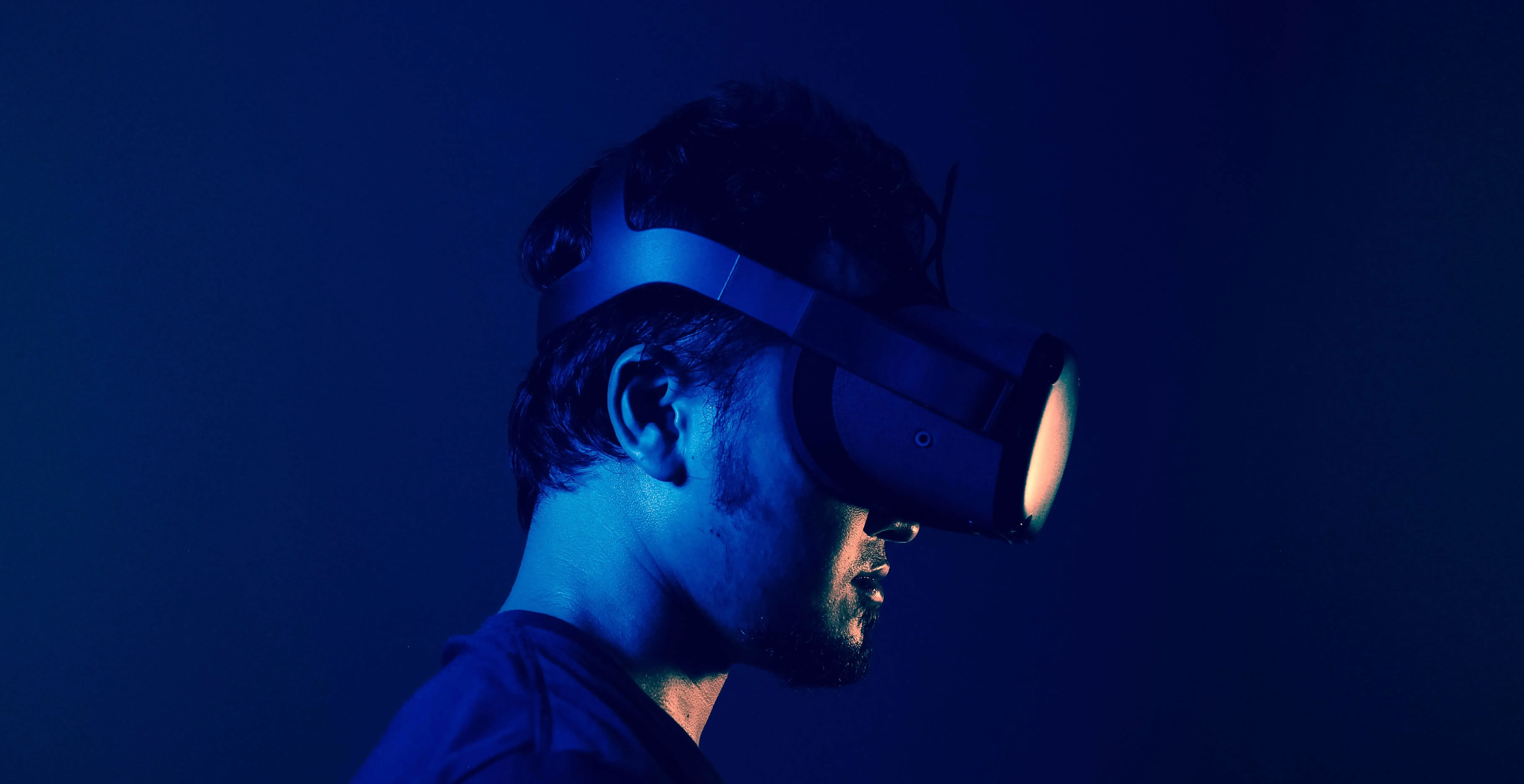
How Can Virtual Reality Overcome the Fear of Flying?
Virtual reality (VR) exposure therapy applies the gold-standard treatment for specific phobias — graded exposure — in a controlled, realistic, and fully customizable digital environment. Instead of imagining a flight or immediately boarding a real aircraft, the person is immersed in a virtual airport and cabin. The brain responds to the virtual experience with real anxiety — which can then be worked through in safety, systematically, without the logistical constraints of real flights. Multiple studies confirm that VR exposure is as effective as in-vivo (real-world) exposure for fear of flying.
VR is one of several technology-based approaches to anxiety treatment: Fight Your Fear of Flying Thanks to Advances in Aeronautical Technology. For comparison with other therapeutic modalities: Hypnosis and Fear of Flying: How to Overcome In-Flight Anxiety?.
The Science Behind VR Exposure Therapy
Exposure therapy for specific phobias works by systematic desensitization: the person is exposed to increasing levels of the feared stimulus, in a safe context, until the anxiety response is extinguished. The brain learns that the feared situation does not produce the catastrophic outcome it anticipates — and the fear gradually diminishes.
For this process to work, the exposure must be realistic enough to trigger the genuine anxiety response. Imaginal exposure (imagining the scenario) works, but is limited by individual differences in imagery ability. Real-life exposure (actually flying) is effective but logistically complex, expensive, and not customizable. VR fills the gap: it is realistic enough to trigger genuine anxiety (presence — the feeling of 'being there' — is sufficient), but fully controllable, replayable, and accessible.
What VR Exposure for Fear of Flying Looks Like
The environment
VR environments for fear of flying typically include: the airport check-in area, security screening, the departure gate, boarding a commercial aircraft, the cabin during takeoff, turbulence scenarios, cruising, and landing. Each environment can be experienced separately or in sequence, with intensity controlled by the therapist.
The process
Sessions typically begin with low-intensity environments (the airport, boarding the empty aircraft) and progress to higher-intensity scenarios (takeoff, turbulence) as the person's anxiety response decreases. The therapist monitors anxiety levels (sometimes using biometric feedback) and controls the progression. Breathing techniques and cognitive interventions are integrated in real time.
Self-directed VR programs
Some programs offer VR apps for consumer headsets (Meta Quest, Apple Vision Pro) that allow self-directed practice between therapy sessions. These are best used as supplements to guided therapy rather than stand-alone treatments, as they lack the real-time guidance that makes VR exposure maximally effective.
What the Research Shows
A 2019 review in Frontiers in Psychiatry found that VR exposure therapy for specific phobias, including fear of flying, produced significant and lasting anxiety reduction comparable to standard in-vivo exposure: Frontiers in Psychiatry: VR for Phobia Treatment.
Psychology Today's overview of VR therapy covers the evidence base and practical considerations: Psychology Today: Virtual Reality Therapy.
Wired has published accessible coverage of how VR is changing phobia treatment in clinical practice: Wired: How VR Is Changing Therapy for Phobias.
Advantages of VR Over Other Forms of Exposure
Controllable: intensity of the experience can be precisely adjusted in real time
Repeatable: the same scenario can be practiced multiple times until the anxiety response decreases
Safe: there is no risk of an actual emergency, and the person can exit the simulation at any moment
Accessible: no need to book flights for treatment; sessions can be conducted in a therapist's office
Detailed: specific triggering elements (turbulence intensity, engine sounds, window views) can be isolated and addressed individually
Limitations
VR exposure is not effective for everyone. People with significant motion sickness triggered by VR, or with very limited visual imagination, may not benefit fully. Some highly anxious individuals may require initial anxiety reduction (through medication or relaxation training) before engaging with VR exposure.
Most importantly, VR alone — without cognitive work, psychoeducation, and ideally a real flight — may not produce the full generalization that makes confidence durable. The best outcomes come from programs that integrate VR as one component of a comprehensive approach.
FAQ
Do I need to own a VR headset?
No. In clinical settings, the VR equipment is provided by the therapist or treatment center. Consumer apps exist for home use with affordable headsets, but their effectiveness as stand-alone tools is not well established.
Will I feel sick using VR?
Some people experience motion sickness (cybersickness) in VR — typically from high-motion environments or extended sessions. Modern high-refresh-rate headsets and well-designed applications minimize this risk. Most fear-of-flying VR applications use relatively low-motion environments (seated in an aircraft cabin) that are less likely to cause discomfort.
How many sessions are needed?
Research protocols typically use 4–8 VR exposure sessions of 30–60 minutes each, often combined with cognitive-behavioral components. Clinical outcomes vary, but significant anxiety reduction is usually observable after the first 2–3 sessions.
Combine VR with a Structured Program
VR is most powerful when integrated into a complete approach. Take the free quiz to understand your anxiety profile, then explore the program that fits your situation.
Our online program integrate the latest approaches — including technology-assisted exposure — into a structured path to confident flying.
For a complete picture of the structured course approach: Fear of Flying Course: The Solution to Travel Peacefully!.