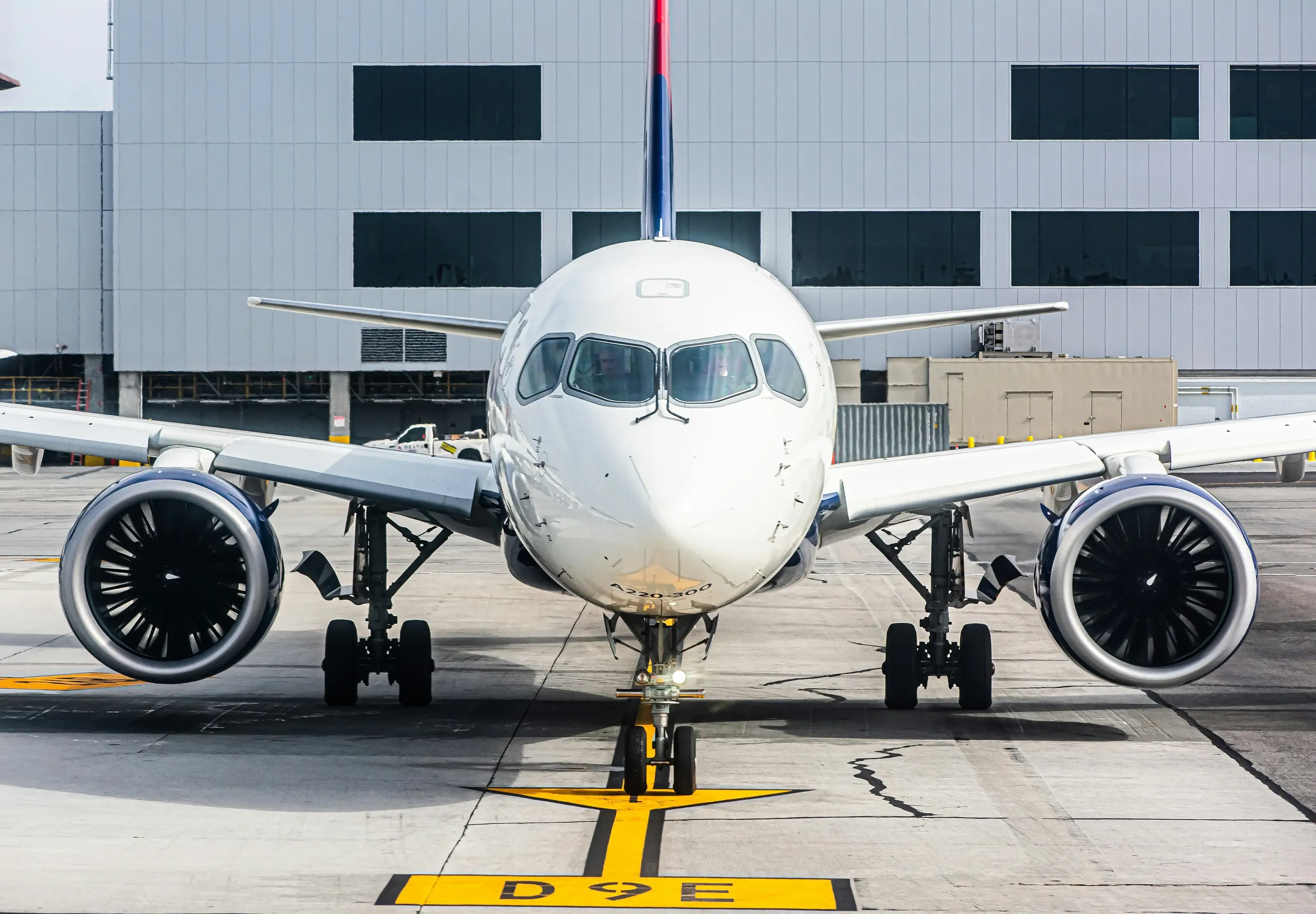
The Airplane: The Safest Mode of Transportation!
Commercial aviation is the safest mode of mass transportation ever created. The accident rate for scheduled commercial airlines is measured in fractions of a fatal accident per million flights. Your statistical likelihood of dying on any given commercial flight is approximately 1 in 11 million — compared to 1 in 100 for a lifetime of driving. You would need to fly every day for over 32,000 years before reaching that level of exposure. These numbers are not estimates or reassurances — they are the documented output of the global aviation safety system.
For context on how many people are nevertheless afraid of flying: Statistics: Who Is Afraid of Flying?. For the specific safety of individual flight events like turbulence: Turbulence on a Plane: Different Categories and Consequences.
The Data: Aviation vs. Other Modes of Transportation
The most commonly cited safety comparison is deaths per billion passenger-miles or per billion passenger-kilometers. Using this metric, commercial aviation in developed countries consistently shows fewer fatalities per distance traveled than driving, motorcycling, cycling, bus travel, and (in some analyses) train travel.
The US National Safety Council's Odds of Dying data is one of the most cited sources on this comparison. The lifetime odds of dying in a motor vehicle crash in the US are approximately 1 in 101. The odds of dying in an air and space transport accident are approximately 1 in 11,000.
IATA's annual safety review consistently reports that the fatal accident rate for commercial aviation is near historical lows. In 2023, the rate was approximately 0.16 fatal accidents per million flights globally.
Why Flying Is So Safe
Extreme redundancy
Every safety-critical system on a commercial aircraft has multiple backups. Electrical systems, hydraulic systems, navigation systems, flight computers — all are designed to continue functioning after a single (or multiple) component failure. The probability of a complete system failure is a product of individual failure probabilities, each of which is already extremely low. The resulting overall failure probability is vanishingly small.
Intensive human training
Commercial pilots are among the most rigorously trained professionals in any field. Before flying passengers, an airline pilot will have accumulated 1,500 to 3,000+ hours of flight experience (requirements vary by country). Training doesn't stop at hiring: recurrent simulator training, proficiency checks, and line checks occur every 6 months throughout a pilot's career. In a simulator, pilots practice failures that have occurred once in the entire history of aviation — so they are prepared for anything.
Independent safety oversight
Aviation safety is overseen by independent regulatory bodies — the FAA, EASA, Transport Canada, CASA, and others — that have authority to ground aircraft, suspend airlines, and impose requirements that supersede commercial interests. Accident investigations are conducted by separate agencies (NTSB, BEA, AAIB) with full independence from the airlines. This system makes the concealment or minimization of safety problems genuinely difficult.
A global learning culture
Every accident and serious incident in commercial aviation is investigated, documented, and shared with the global aviation community. Safety recommendations from accident investigations are adopted as industry standards. The failures of decades past have been systematically learned from and addressed. Aviation's safety record is not an accident — it is the product of decades of deliberate, evidence-driven improvement.
The Perception Gap
If flying is this safe, why do so many people fear it? The answer lies in human psychology, not in statistics. Availability heuristic: dramatic, newsworthy events are remembered and weighted more heavily than routine ones. The one air accident that makes global headlines is far more memorable than the 100,000 safe flights that happened the same day. Dread risk: people fear risks that feel catastrophic, uncontrollable, and unfamiliar more than familiar risks (like driving), even when the familiar risk is statistically much greater.
For a complete picture of the statistics of fear of flying: Statistics: Who Is Afraid of Flying?. For a breakdown of specific events that feel dangerous but aren't: Can a Plane Be Struck by Lightning?.
Aviation Safety Milestones
The jet age began in the late 1950s. Early jet aviation had significantly higher accident rates — much of the safety improvement has occurred over the past 40 years. Key milestones include: introduction of terrain awareness and warning systems (TAWS/GPWS), which eliminated controlled flight into terrain (once a leading accident cause); introduction of TCAS (traffic collision avoidance systems); fly-by-wire controls with envelope protection; improved crew resource management training following accidents attributable to communication failures.
Sources
IATA's annual safety review provides the definitive global aviation accident and incident statistics: IATA: Safety Statistics — Annual Review.
MIT's aviation safety data repository provides independently compiled accident statistics: MIT: Aviation Safety Data.
The National Safety Council's Odds of Dying data provides the clearest comparison of aviation risk against everyday risks: National Safety Council: Odds of Dying.
FAQ
Is flying safer than driving?
Yes, by orders of magnitude. Per mile traveled, per hour of travel, and per trip, commercial aviation has a dramatically lower fatality rate than private automobile travel in every country where both modes are used.
Are some airlines safer than others?
Yes. Safety standards vary globally. Airlines operating under FAA (US), EASA (Europe), Transport Canada, or equivalent stringent regulatory oversight have very high safety standards. Some carriers in regions with less robust regulatory oversight have higher accident rates. If you're choosing an airline for a trip, IATA's Operational Safety Audit (IOSA) certification is a recognized indicator of meeting international safety standards.
Is it safer to fly at night or during the day?
There is no significant overall safety difference between daytime and nighttime commercial flying. Aircraft navigation and landing systems are fully capable of night operations, and weather systems are monitored regardless of time of day.
Fly Informed, Fly Confident
The numbers are unambiguous. What remains is the psychological work — and that's where we can help. Take the free quiz to understand your specific anxiety pattern.
Our online program combine this factual foundation with the psychological tools to actually change how flying feels.