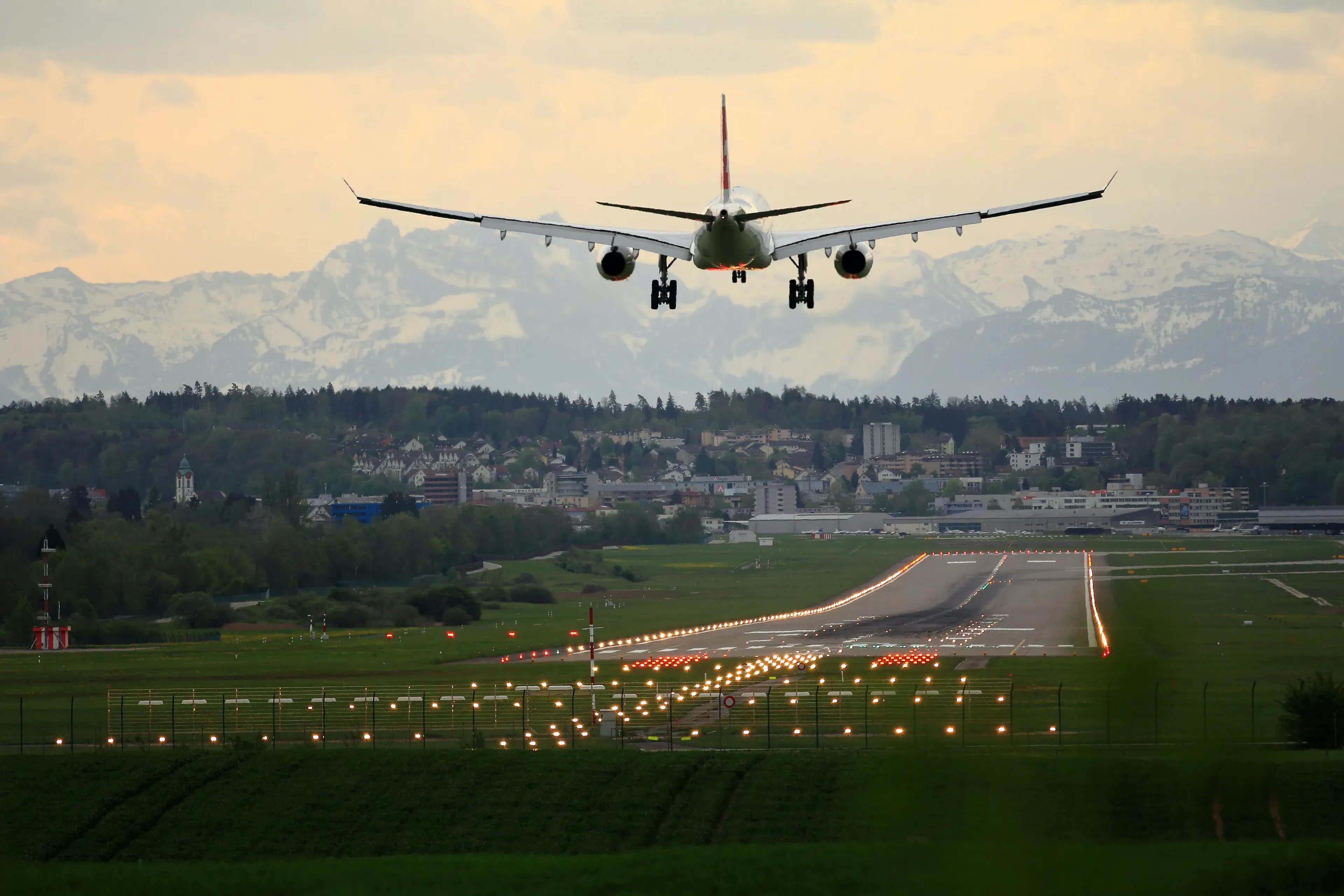
Why Do Planes Take Off and Land Into the Wind?
Aircraft take off and land into the wind — into the headwind — because it increases the airflow over the wings, generating more lift at a lower ground speed. A headwind of 20 knots effectively adds 20 knots to the aircraft's airspeed without requiring any additional speed on the runway. This shortens takeoff and landing distances, reduces the speed needed to achieve liftoff, and provides more control authority during these critical phases. It is one of the most elegant examples of physics working in aviation's favor.
For context on the speeds involved during takeoff and landing: What Is the Speed of a Commercial Airplane?. For how lift is generated in the first place: How Does a Plane Fly?.
The Physics of Lift and Airspeed
Lift is generated by the wings as they move through the air. The faster the air moves over the wing surfaces, the more lift is produced. The speed that matters for lift is not ground speed (how fast the aircraft moves over the ground) but airspeed — the speed of the air flowing over the wings.
Airspeed = Ground speed + Headwind component. A plane that needs 150 knots of airspeed to lift off, facing a 20-knot headwind, only needs to reach 130 knots on the ground. A plane taking off with a 20-knot tailwind needs to reach 170 knots on the ground. The runway distance required for takeoff is dramatically longer in a tailwind.
How Airports Are Designed Around Wind
Runway orientation
Airport runways are oriented to align with the prevailing wind direction at the location. At major airports, runway direction is carefully chosen based on decades of wind data. This is why many airports have runways pointing in similar directions — they reflect the dominant local wind patterns.
At airports with complex terrain or variable local winds, multiple runways may be oriented at different angles to ensure that at least one runway is always approximately into the wind. Large hubs like Chicago O'Hare, London Heathrow, and Hong Kong International have multiple runways in different orientations for exactly this reason.
Runway naming conventions
Runways are named using compass headings rounded to the nearest 10 degrees and divided by 10. Runway 27 points toward 270° (due west). Its reciprocal, Runway 09, points toward 090° (due east). A flight landing on Runway 27 is heading west — into an easterly wind.
What Happens When There Is a Crosswind?
Real-world conditions often involve wind that doesn't align perfectly with the runway. A crosswind — wind blowing perpendicular to the runway — is one of the most technically demanding aspects of landing. Pilots must apply a combination of banking (crab technique) and rudder input to keep the aircraft aligned with the runway centerline while drifting sideways through the air.
Each aircraft type has a demonstrated crosswind limit — the maximum crosswind component for which the aircraft has been certified. For most commercial airliners, this is in the range of 25–38 knots. Beyond this limit, operations on that runway are not permitted.
Why Is This Relevant to Anxious Flyers?
Takeoff and landing are the phases of flight that trigger the most anxiety. Strange movements, sudden inputs, the feeling of not being in control. Understanding why these movements happen — and that they are deliberate, precisely calculated responses to physics — changes the experience.
A crosswind landing involves the aircraft appearing to approach the runway at an angle, then straightening abruptly just before touchdown. This looks alarming from the window. But it is a standard technique, practiced hundreds of times by every commercial pilot, and one of the most routine maneuvers in commercial aviation.
For more context on the physics that keep a plane in the air: What Is the Cruising Altitude of a Commercial Airplane?.
Sources
The FAA's Aeronautical Information Manual covers takeoff and landing procedures in detail: FAA: Aeronautical Information Manual — Takeoff and Landing.
NASA's Glenn Research Center provides accessible, authoritative explanations of the principles of flight: NASA Glenn Research Center: Principles of Flight.
The Smithsonian Air and Space Museum covers aviation fundamentals in plain language: Smithsonian Air and Space: Why Do Planes Take Off Into the Wind?.
FAQ
Can planes take off and land in a tailwind?
Yes, but it is not preferred. A tailwind increases the ground speed required to achieve liftoff, lengthening the takeoff roll and reducing available stopping distance on landing. Most airlines and regulatory authorities set maximum tailwind limits of 10–15 knots for takeoff and landing.
Why do some landings feel harder than others?
The firmness of a landing depends on sink rate at touchdown, headwind, crosswind, aircraft weight, and pilot technique. A headwind landing is typically smoother than a tailwind landing. A crosswind landing involves more manual correction and may feel less symmetrical.
Is there ever a situation where landing downwind is necessary?
Yes — in emergency situations where the aircraft cannot make a go-around, or when runway constraints (obstacles, terrain) make a specific direction mandatory, a tailwind landing may be necessary. Pilots are trained for this scenario.
Understanding Reassures
The more you understand about what happens during a flight, the less room anxiety has. Explore the full picture: How Does a Plane Fly?.
And if you'd like structured support to fly confidently: Take the free fear of flying quiz, or explore our online program.